
Every morning, before the sun breaks through the lagoon mist, discreet gestures are performed in the shrines of Aneho. A calabash of clear water poured on the ground. A few kola nuts placed at the foot of a silk-cotton tree. A dash of palm gin offered to the earth. These gestures, which the uninitiated might mistake for simple domestic routines, are the beating heart of Guin spirituality: libation.
Libation is the first act of any communication with the divinities. Before praying, asking, thanking, one pours. One offers. One shares. In a culture where the written word was never the primary vehicle of memory, gesture is speech.
Why pour water?
In Guin cosmogony, water is the medium par excellence between worlds. It connects sky and earth, the visible and the invisible. Pouring water in libation opens a channel of communication with ancestors and divinities. The water used is never ordinary — ideally rainwater collected in a clean vessel, or spring water. Tap water is avoided: having passed through pipes, it has lost direct contact with the sky. Palm gin is used for warrior ancestors. Deep red palm oil is reserved for earth divinities.
The gesture itself follows strict rules: always poured with the right hand, starting north (direction of founding ancestors), then east, south, west. Never in a closed circle, for divinities must be able to enter and leave freely. The stream must touch the ground without splashing — mastery of the gesture signifies self-mastery.
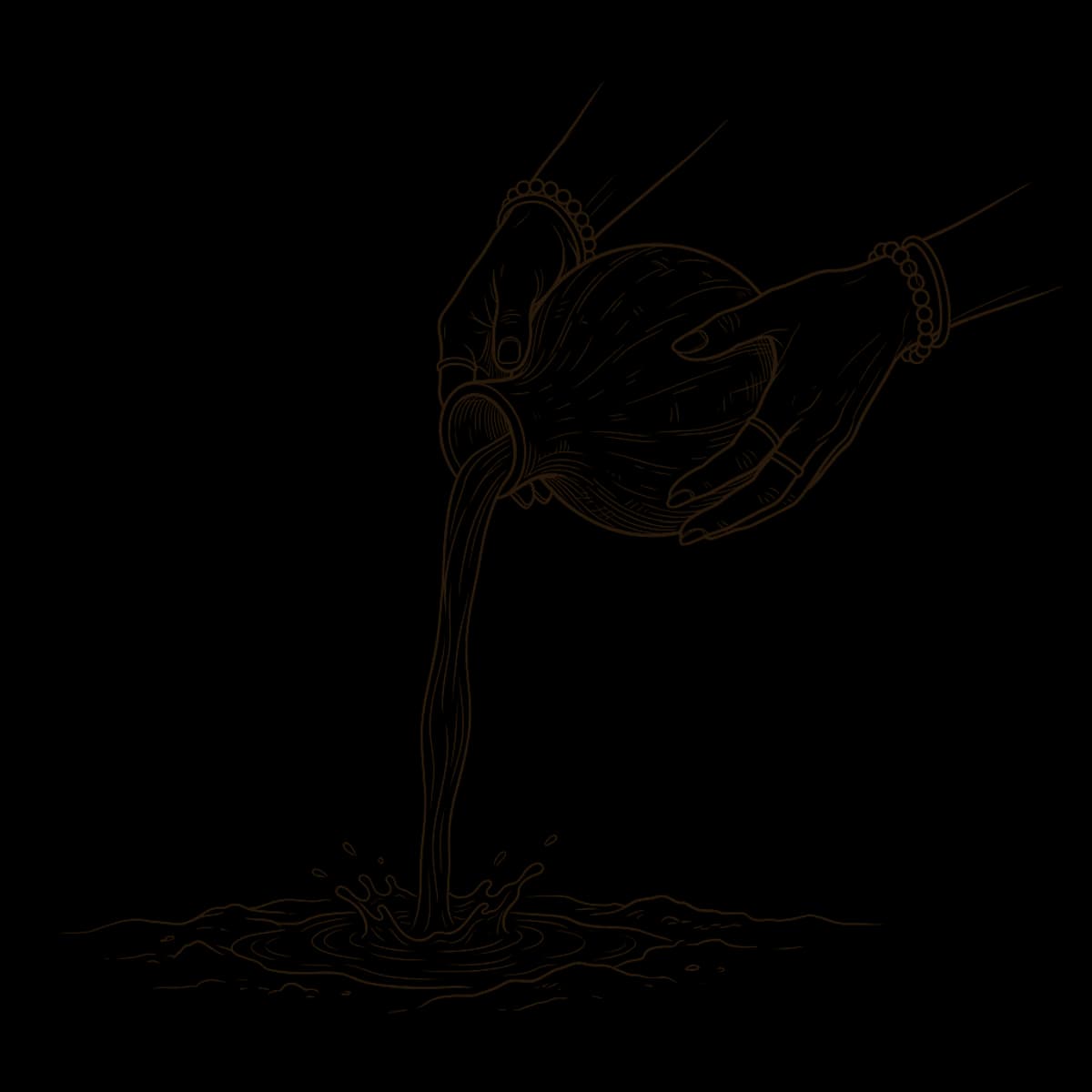
Libation, the first gesture of every Guin ceremony
Material offerings
Beyond liquid libation, material offerings constitute the second pillar of Guin devotion. Each divinity has preferences: kola nuts for ancestors, corn for earth divinities, fish for water spirits, a rooster for warriors. Colors matter: white for peace and purity, red for blood and strength, black for protection. An offering composed solely of white elements signals peace. One mixing red and black may be interpreted as a call for protection amid conflict.
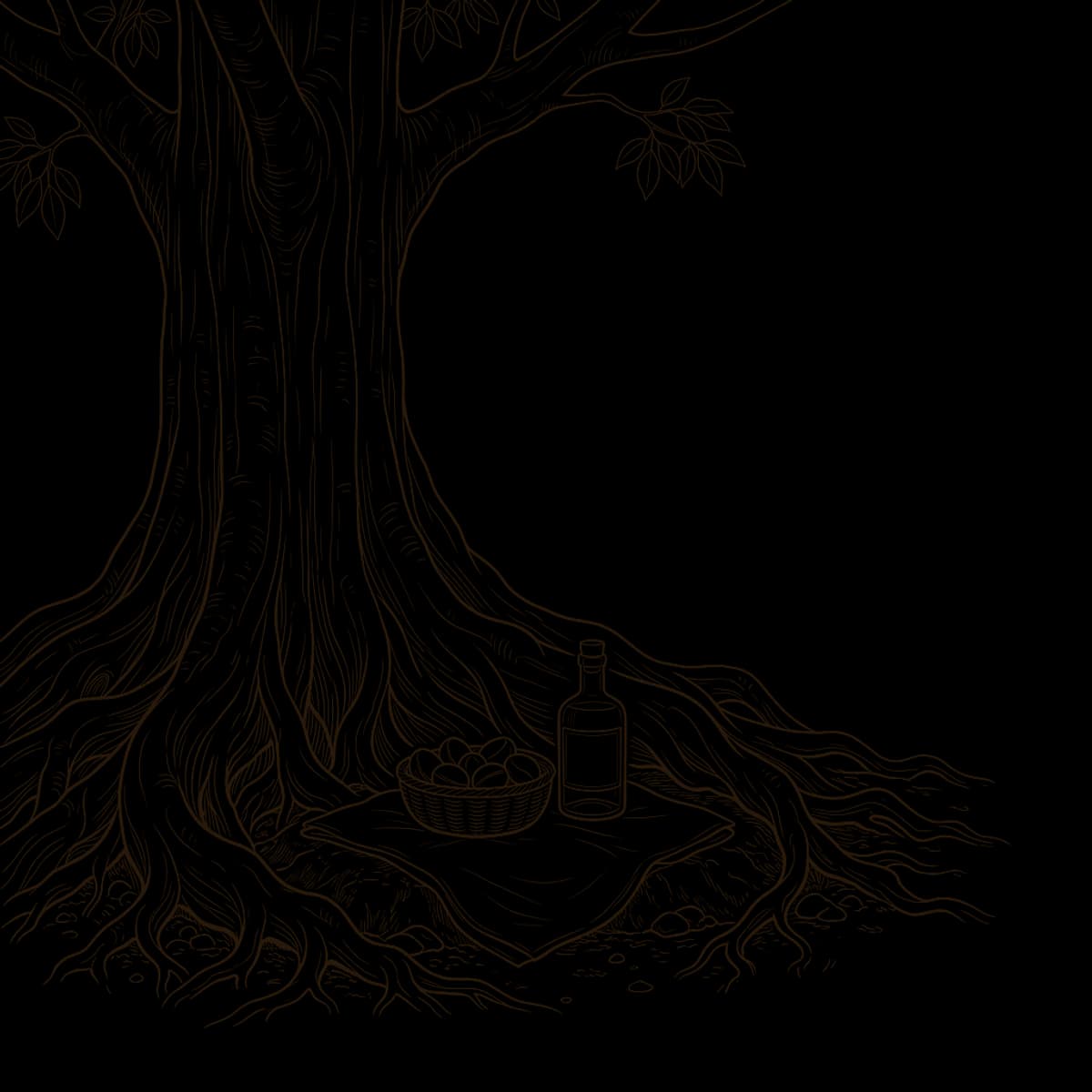
Offerings at the foot of a sacred silk-cotton tree
Offerings are placed in precise locations — at the foot of silk-cotton trees, on the lagoon shore, at shrine entrances. Sacred space is structured like an invisible map that only initiates can read. Once placed, offerings are never touched by human hands. Birds, insects, lizards consume them and thereby transmit them to the divinities. The cycle of giving is complete.
When and why offer?
The occasions for libation and offering are countless. Before a journey, to seek protection. Upon return, to give thanks. Before sowing, for the earth to be generous. After harvest, in gratitude. At a child's birth. At an elder's death. In Guin tradition, there is no separation between the sacred and the everyday. Every life event occasions dialogue with the invisible. Libations and offerings are the language of this dialogue — a wordless language whose eloquence three centuries of practice have not dulled.
Which divinities receive what
Each of the 41 divinities of the Guin pantheon has specific preferences that must be honored. Togbe Degbe, the first ancestor, receives pure water and white kola nuts — nothing else, for he is the beginning and needs no adornment. The warrior divinities like Ata Sakuma receive palm gin and the blood of a rooster, symbols of strength. The water divinities receive fish and shells. Mama Koley, the forest mother, receives corn and palm oil at the base of the oldest silk-cotton trees. Getting these preferences wrong is not a minor error — it can be interpreted as disrespect and may require additional purification ceremonies to correct.
The social fabric of offerings
Libations are never purely individual acts. Even when performed by a single person, they involve the entire community. The water poured on the ground will be absorbed by the same earth where children play and markets are held. The offerings consumed by birds will nourish the same birds that sing over the entire village. This is by design: the blessing requested through libation is meant to benefit the collective. A person who offers only for themselves, without invoking the well-being of family and neighbors, raises suspicion among the elders. The Guin adage says: a calabash poured for one person is a calabash spilled — the ancestors hear only the prayers that include others.
Offerings in times of crisis
During epidemics, droughts or conflicts, the frequency and scale of offerings intensify dramatically. The entire community may be called to a collective libation ceremony led by the Hunon priests. In 2020, during the COVID-19 pandemic, traditional authorities in Glidji organized special offerings to invoke the ancestors' protection — a practice that went largely unreported internationally but mattered deeply to the local population. These crisis ceremonies often involve animal sacrifice, with the blood used to seal the community's covenant with the divinities. The meat is then shared and consumed collectively — nothing is wasted, for the divinities receive the spiritual essence while the community receives the physical nourishment.