 Chargement en cours...Chargement en cours...Chargement en cours...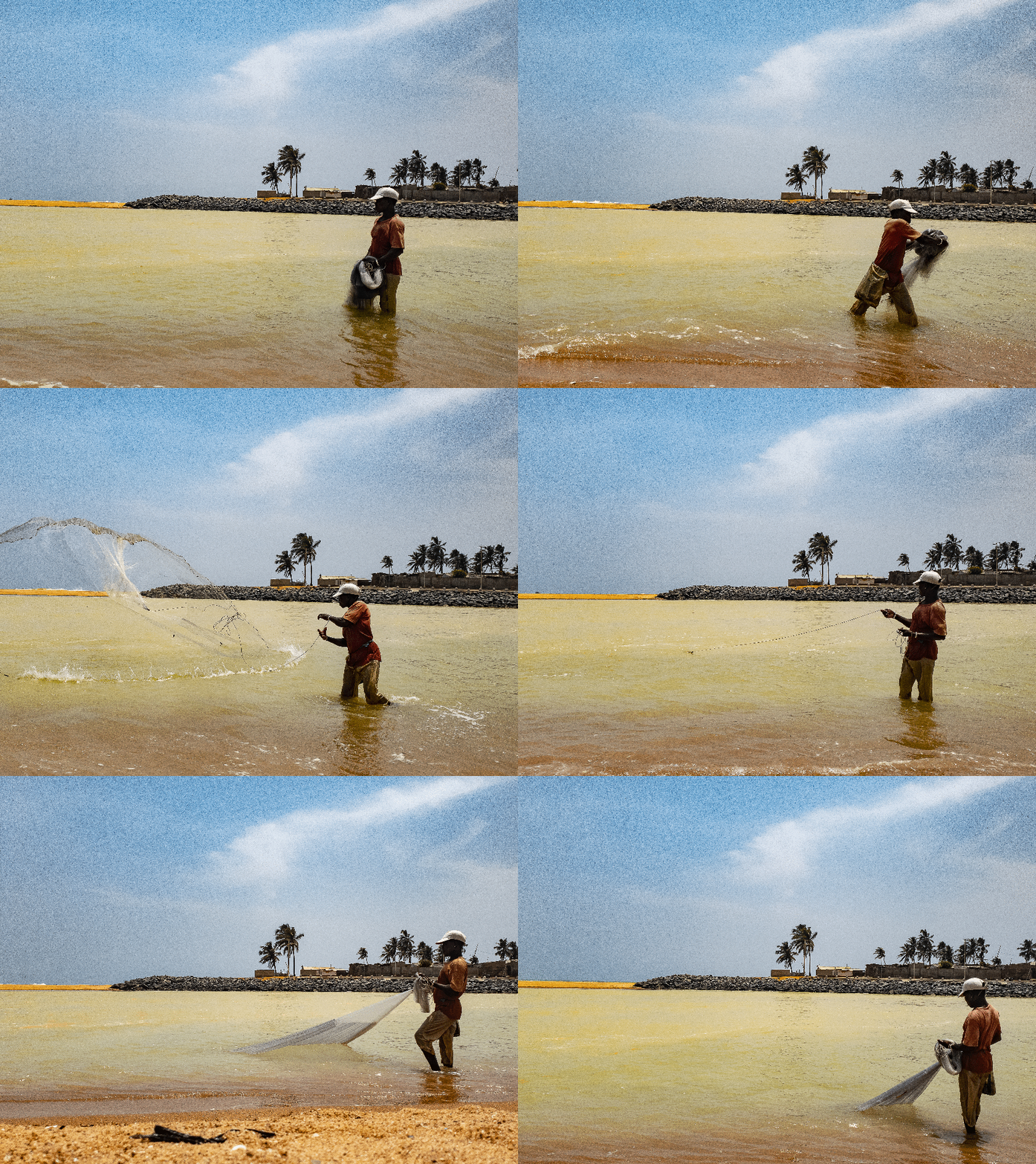

Let yourself be guided between the Atlantic Ocean and the lagoon. Discover the cradle of the Guin people, where Voodoo sacredness meets five centuries of Afro-Brazilian architecture.
The grand narrative. Detailed chronicles tracing the history of Petit Popo, from Afro-Brazilian merchants to independence.
Histoire de Zébé à Aného, première capitale coloniale du protectorat allemand au Togo (1887-1897), abritant aujourd'hui préfecture, musée et hôpital psychiatrique.
Histoire des célèbres Nana Benz du Togo. Comment elles ont dominé le commerce du wax Vlisco, imposé leur pouvoir politique, et pourquoi Aného leur rend hommage aujourd'hui.
Découverte de l'architecture afro-brésilienne à Aného. L'histoire des Agoudas, ces esclaves revenus du Brésil, et leur impact sur le patrimoine urbain togolais.
Histoire du wharf allemand d'Aneho, infrastructure coloniale construite en 1890 et detruite par l'erosion. Reconstitution a partir des archives et vestiges.
Les registres coloniaux allemands d'Aneho. Archives disponibles aux Bundesarchiv de Berlin et a la mission SVD de Rome. Guide complet pour chercheurs et genealogistes.
Histoire du protectorat allemand au Togo vu depuis Aneho. De 1884 a 1914, trente ans de colonisation allemande : administration, mission SVD, infrastructures et resistances locales.
A fluid geography. Aneho is bordered by the Ocean, crossed by the Lagoon, connected to the great Mono River and watches over the mystical Blue Lake.
Sacred, ancestral, majestic shade, silent fervor

Royal, diplomatic, colonial architecture, quiet authority

Mercantile, urban, traces of the past, coastal effervescence
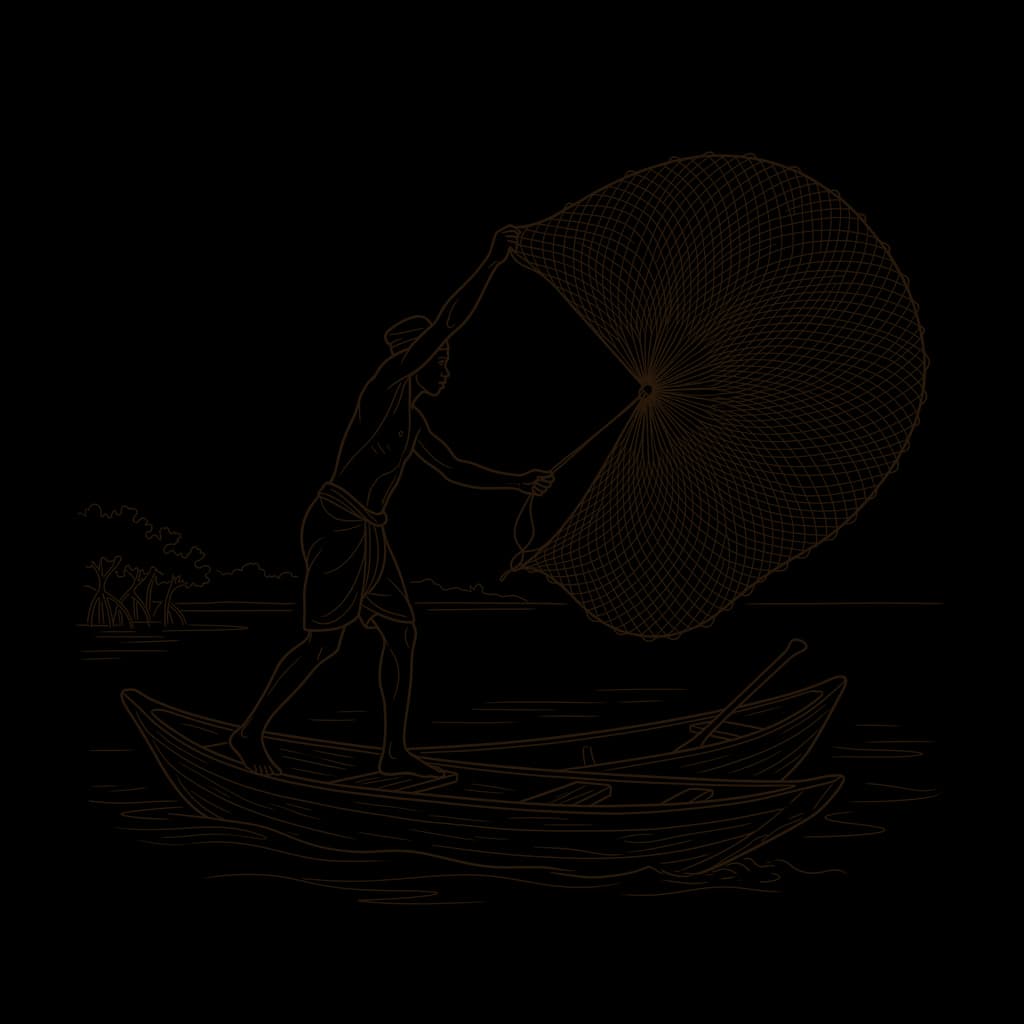
Vast, changing, power of waves, infinite light
No black magic. No superstition. Voodoo is the grammar of the invisible world. Encounter the pantheon of the 41 Guin divinities.
Supreme Ancestor · Beginning
Terrestrial Force · Stability
Feminine Force · Guardian of the Sacred Forest
Warrior · Protector of Borders
Sovereignty · Akangban Justice
Guardian of the Sacred Stone
Messenger of Fortune
Interpreter of Signs
The living memory of Aneho. Raw testimonies and intimate portraits of those who weave the daily life of the waterside city.
The intelligence of the hand. Complex coastal gastronomy, polyrhythmic Agbadza and woven crafts passed down from generation to generation.

The Alchemy of Rice and Beans
More than a dish, Ayimolou is the heartbeat of Aneho in the early morning. This skillful blend of rice and black beans, cooked together until perfect union, is the foundation of Guin-Mina conviviality. Traditionally served with "Gari" (cassava flour) and a spicy black sauce (Wagashi or frying), it embodies the generosity and strength of the land.
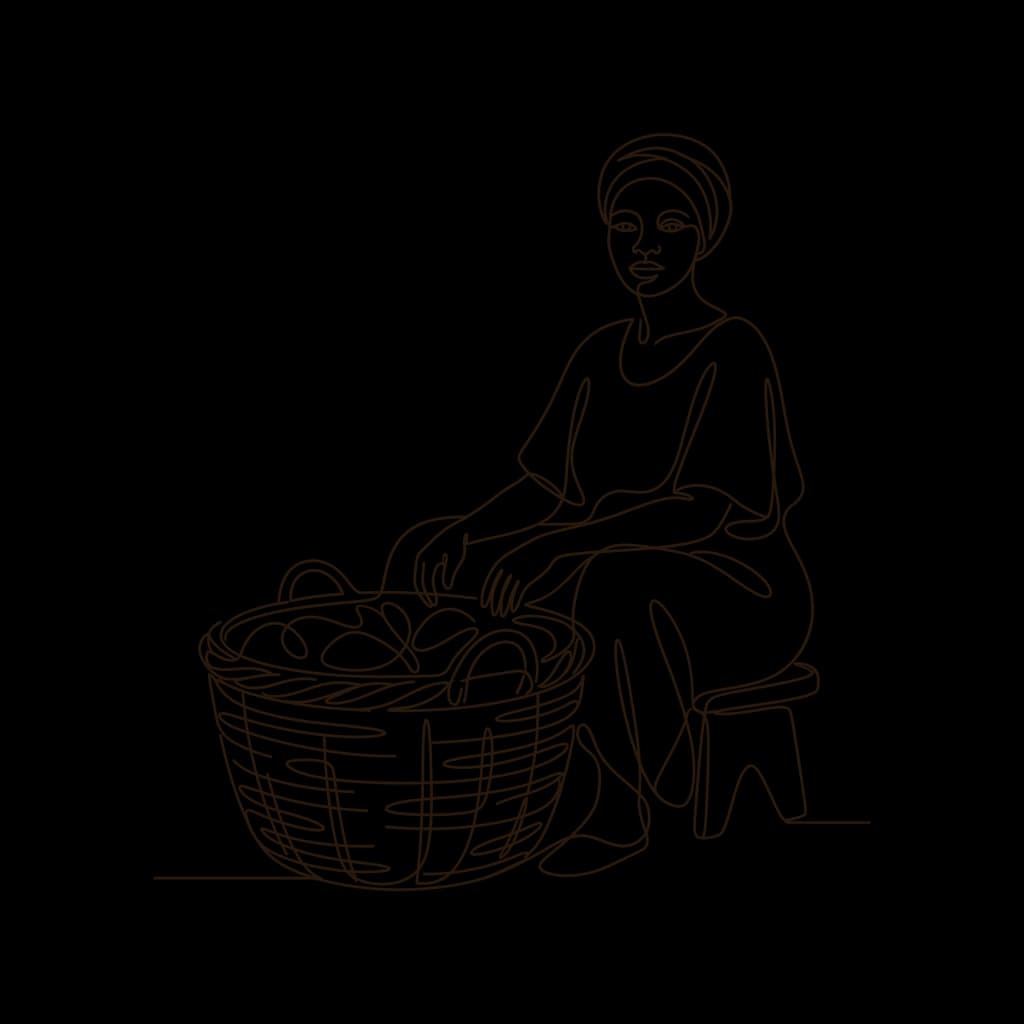
The Soul of Mono Clay
On the banks of the Mono River, the hands of the women of Agomé-Glozou transform silt into eternity. This ancestral pottery, shaped without a wheel, keeps the trace of the thumb and the wind. Conservation jars and ritual canaries are the fruit of open-air firing, a dance with fire that gives the clay its ochre highlights and legendary robustness.
The Freshness of Fermented Corn
Dessert or snack, Akpan is the milky caress of Aneho. This plant-based yogurt made from fermented corn is a feat of domestic technique. Creamy, slightly tangy, and served fresh, it is the ultimate refreshment for hot afternoons on the coast. Accompanied by sugar or milk, it tells of the Guin mastery of grain and time.
The Song of Wax and Dye
The art of Batik in Aneho is a writing on fabric. Using hot wax and indigo baths, artisans draw patterns that are symbols of protection and prestige. The characteristic cracks of batik are the signature of the unpredictable, making each cloth a unique work, witnessing a textile identity that never stops evolving.

The Ceremonial New Year Couscous
Symbol of renewal and central dish of the Epé-Ekpé festival, Yeke-Yeke is a feat of patience. This white corn couscous, of extreme fineness, is obtained through successive siftings. Its vaporous lightness and immaculate color make it a sacred dish, often enjoyed in the community to celebrate forgiveness and restored peace.
The Prestige Roasted Piglet
Hanvidokpomé is the signature of Aneho's grand festive tables. This suckling pig, marinated with secret coastal spices and roasted whole in traditional clay ovens, offers crispy skin and melting meat. It is the ultimate dish for celebrations and hospitality, testifying to the Afro-Brazilian influence on local gastronomy.
The city of tomorrow. Visionary projects blending ecology, sustainable urban planning and education to carry the glow of Aneho into the future.

The Museum of Living History of Aneho-Glidji (MHiVAA) is the flagship cultural project of the coast. Housed in a restored 1905 Afro-Brazilian building, it brings together for the first time the regalia of the three royal houses: Glidji (1663), Nlessi (1666), and Lolan (1821). Supported by the AIMF and the Aquereburu Foundation, this place of memory uses sound scenography to make the history of the Guin-Mina people resonate. The project reached a decisive milestone in 2026 with the completion of the main building's restoration and the launch of the collection of objects and documents from the royal families. Public opening is planned for 2027. MHiVAA aims to be much more than a museum: a research center on Guin history, a place of intergenerational dialogue and a major tourist attraction for the region. The project reached a decisive milestone in 2026 with the completion of the main building's restoration. Public opening is planned for 2027. MHiVAA aims to be much more than a museum: a research center on Guin history and a major tourist attraction.

In Anyronkopé and on Guin Island, ecological renaissance is underway. Supported by the WACA ResIP and FAO programs, mangrove restoration projects are fighting Mono's erosion. These 'Lungs of the Lagoon' are protected by local communities, forming a natural barrier against climate change while revitalizing fishery resources. Results are already visible: over 5 hectares of mangroves replanted, a measurable decrease in erosion at protected sites, and the creation of a women's cooperative that adds value to mangrove products (wood, fish, salt). The project now serves as a model for other coastal initiatives in West Africa, from Guinea to Nigeria. Results are already visible: over 5 hectares of mangroves replanted, a measurable decrease in erosion at protected sites, and the creation of a women's cooperative. The project now serves as a model for other coastal initiatives in West Africa.

Led by the Lacs 1 Municipality with the support of partners like GIZ, the Aneho 2050 vision transforms the city into a 'Green City'. This ambitious master plan includes the creation of an urban forest, the pedestrianization of the historical center, and circular resource management. It is a resilient city being invented, reconciling architectural modernity and ecological heritage. The plan integrates several components: soft mobility with partial pedestrianization of the historic center, waste management with a sorting and composting center project, and energy efficiency of public buildings. Cooperation with GIZ provides technical and financial support over time. Aneho 2050 is one of the first sustainable urban development plans of this scale for a secondary Togolese city. The plan integrates several components: soft mobility with partial pedestrianization of the historic center, waste management with a sorting center project, and energy efficiency of public buildings. Cooperation with GIZ provides technical and financial support. Aneho 2050 is one of the first sustainable urban development plans for a Togolese secondary city.

The Aneho International History Festival is no longer just a celebration; it is a diplomatic and economic crossroads. By attracting intellectuals, investors, and diasporas, the FIHA positions Aneho as an essential intellectual hub on the West African coast. Each edition strengthens bridges with the world and drives new local development projects. FIHA has already welcomed researchers from Ghana, Benin, Nigeria, France, Germany and Brazil. Conference proceedings are published and accessible online. Beyond the annual event, FIHA develops research residency programs and partnerships with the universities of Lome, Accra and Paris. It positions Aneho as a crossroads for reflection on African history. FIHA has already welcomed researchers from Ghana, Benin, Nigeria, France, Germany and Brazil. Conference proceedings are published and accessible online. Beyond the annual event, FIHA develops research residency programs and partnerships with the universities of Lome, Accra and Paris.
Eco-responsible accommodation, community-certified guides, immersion in ceremonies and lagoon navigation.